
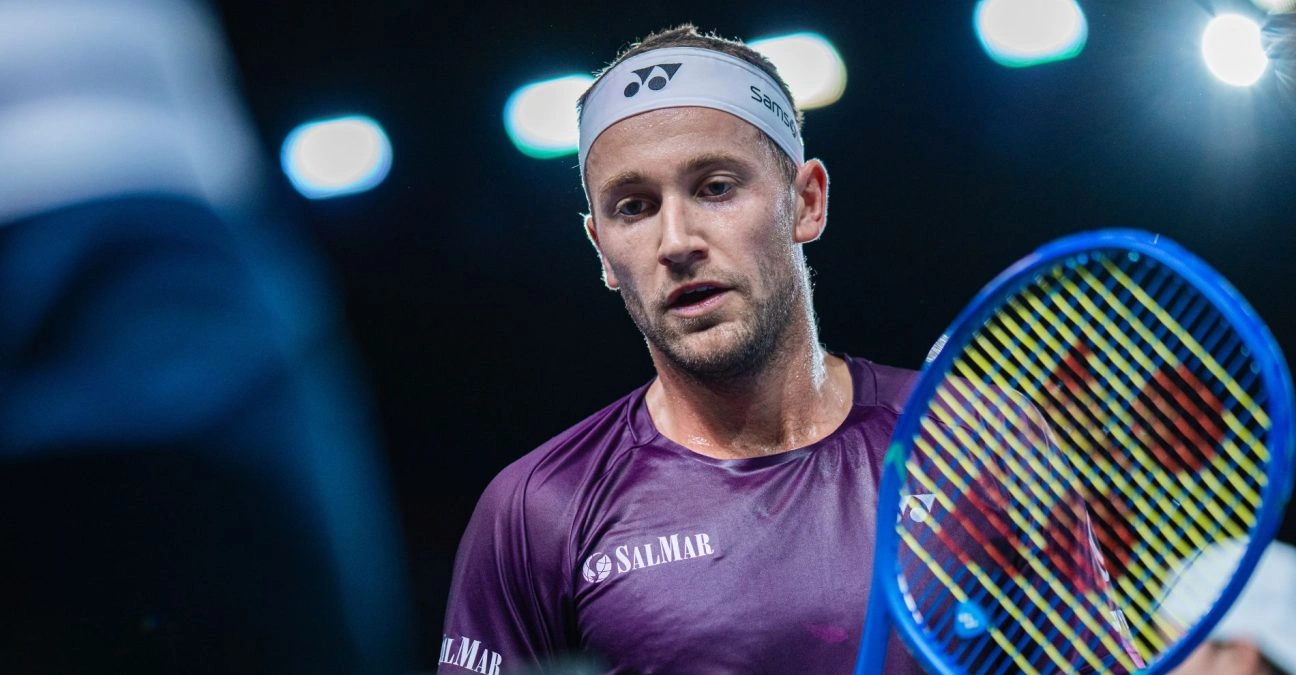
Casper Ruud demonstrated the resilience that has made him one of the most consistent performers on clay courts in recent years, overcoming signs of heat exhaustion to claim a hard-fought victory in his opening-round match at Roland Garros.
The Norwegian star faced more than just his opponent on the Paris clay, as soaring temperatures created difficult conditions for players throughout the tournament grounds. Despite experiencing physical discomfort during the contest, Ruud managed to maintain his composure and find a way through a challenging encounter, keeping his French Open campaign alive.
For a player with a strong history at Roland Garros, the victory represented an important first step toward another deep run in one of tennis’s most prestigious events.
Tough Conditions in Paris
Weather quickly became one of the major storylines during the opening days of the tournament.
Players competing across the Roland Garros complex faced unusually warm conditions that tested endurance and physical preparation. Long rallies, extended games, and the demanding nature of clay-court tennis only added to the challenge.
For athletes accustomed to competing at the highest level, managing energy and hydration became nearly as important as executing tactical plans.
Ruud, known for his exceptional fitness and consistency, appeared to be affected by the intense heat as the match progressed. At various points, he showed signs of physical strain while attempting to maintain the high level of movement required on clay.
Even so, he refused to allow the conditions to derail his performance.
A Difficult Opening Test
Grand Slam tournaments often present unique challenges in the early rounds.
Lower-ranked opponents frequently arrive with little pressure and everything to gain, creating potentially dangerous matchups for seeded players. That reality was evident as Ruud found himself pushed to work for nearly every point.
His opponent capitalized on opportunities and forced the Norwegian to earn his advantage rather than simply relying on ranking or reputation.
The match developed into a physical and mental battle, requiring patience and discipline from both competitors. Long exchanges became common, and momentum shifted several times throughout the contest.
Under those circumstances, Ruud’s experience proved invaluable.
Having competed in multiple major finals and numerous high-pressure matches, he remained focused even when conditions became increasingly demanding.
Fighting Through Physical Challenges
The most remarkable aspect of the victory was Ruud’s ability to manage the physical difficulties he encountered during the match.
Heat exhaustion can affect athletes in numerous ways, including fatigue, dizziness, reduced concentration, and muscle discomfort. In a sport where every point can hinge on split-second decisions, even minor physical issues can become significant obstacles.
Observers noted moments when Ruud appeared uncomfortable between points as temperatures continued to rise.
However, rather than allowing frustration to take over, he adjusted his approach. He took advantage of breaks in play, focused on conserving energy when possible, and relied on his extensive experience competing in difficult conditions.
Those adjustments helped him remain competitive during critical stages of the match.
His determination ultimately became one of the defining stories of the day.
Why Roland Garros Suits Ruud
Few players in the men’s game have built a stronger clay-court reputation over the past several seasons than Ruud.
The Norwegian has repeatedly demonstrated his ability to thrive on slower surfaces, where patience, movement, and tactical discipline are rewarded. His heavy topspin forehand and strong defensive skills make him particularly effective on clay.
Roland Garros has been the site of some of his greatest achievements.
Over the years, he has established himself as one of the tournament’s most reliable contenders, producing deep runs and challenging some of the sport’s biggest names. Those experiences have strengthened his confidence whenever he returns to Paris.
Even when facing adversity, he understands what it takes to succeed on the famous red clay.
That familiarity likely played a role in helping him navigate a difficult opening-round challenge.
Mental Strength Makes the Difference
Elite tennis often becomes a test of mental toughness as much as physical skill.
Ruud’s victory highlighted that reality.
When athletes encounter physical discomfort during competition, maintaining concentration can become increasingly difficult. Negative thoughts, frustration, and self-doubt can quickly emerge if performance begins to suffer.
Instead, Ruud remained composed.
He continued focusing on individual points rather than becoming distracted by the broader challenges he faced. That mindset allowed him to stay engaged tactically and avoid giving away momentum during crucial moments.
His ability to remain mentally steady has long been one of his greatest strengths.
Throughout his career, coaches and fellow players have praised his professionalism and calm demeanor. Those qualities were on full display during this opening-round encounter.
A Positive Sign for the Tournament
While the physical concerns attracted attention, the outcome also provided encouraging signs for Ruud’s prospects moving forward.
Winning under difficult circumstances can often build confidence as tournaments progress. Players who successfully navigate early adversity frequently emerge stronger in later rounds.
The Norwegian will undoubtedly continue monitoring his recovery and physical condition in the days ahead.
Fortunately, Grand Slam events provide athletes with support teams dedicated to nutrition, hydration, recovery, and preparation. Those resources can help players manage the demands of a two-week tournament.
If Ruud recovers well, his opening victory could ultimately be remembered as an important stepping stone rather than a warning sign.
The road through Roland Garros remains challenging, with numerous elite players competing for the championship.
Nevertheless, Ruud’s first-round victory reinforced why he continues to be viewed as a dangerous contender on clay. His ability to overcome both a determined opponent and difficult physical circumstances demonstrated the resilience required to succeed at the highest level.
Every Grand Slam campaign begins with a single win, and this one required considerably more effort than many expected.
For Casper Ruud, the triumph was about more than advancing to the next round. It showcased his determination, mental strength, and willingness to fight through adversity when conditions were far from ideal.
As the tournament continues, those qualities could prove just as valuable as any forehand winner or tactical adjustment. If he can maintain his health and build momentum, the Norwegian may once again find himself among the players making headlines deep into the second week in Paris.