
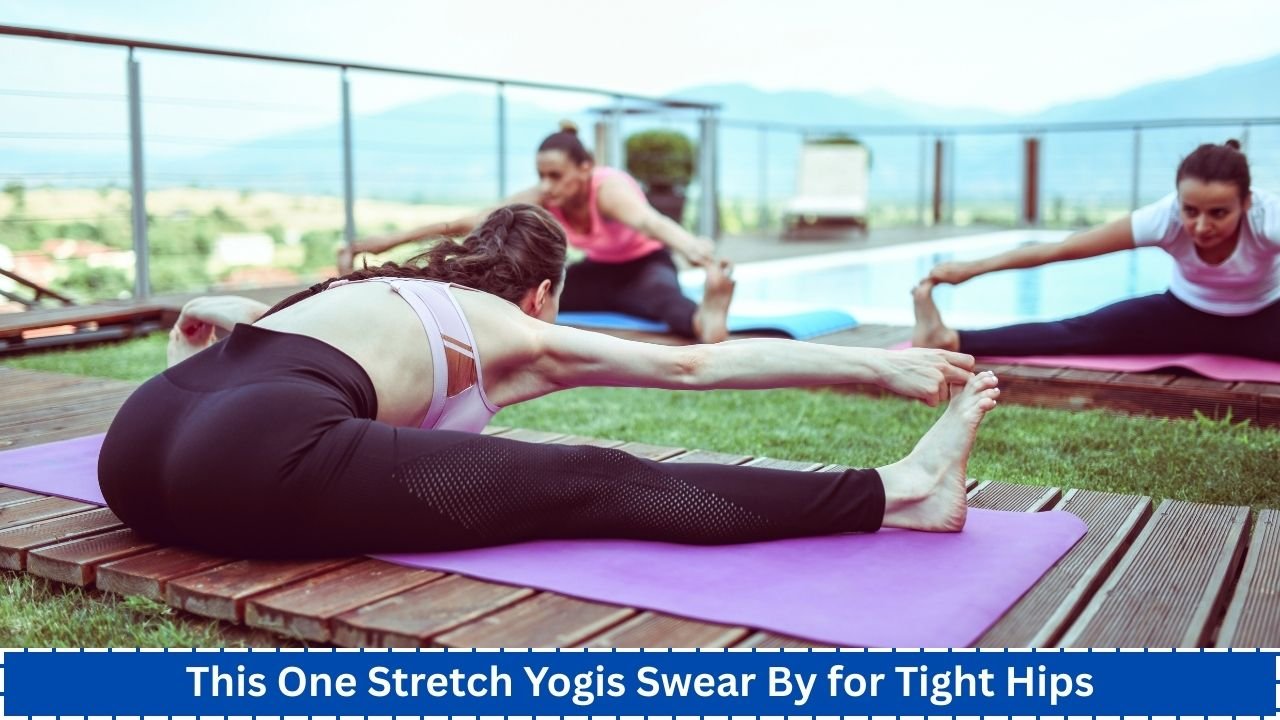
Tight hips have quietly become one of the most common complaints in modern life. Long hours at a desk, reduced daily movement, stress, and even intense workouts can all contribute to stiffness around the hip flexors, glutes, and deep rotators. While there are dozens of mobility drills available, many yoga practitioners consistently return to one powerful yet accessible stretch: Pigeon Pose.
Often described as intense but deeply relieving, Pigeon Pose has earned its reputation for targeting areas that standard stretches frequently miss. When practiced mindfully, it can improve mobility, ease lower-back tension, and restore balance to overworked hip muscles.
Why Tight Hips Are So Common Today
Before understanding why this stretch works, it helps to understand the problem. Tight hips typically develop due to:
- Prolonged sitting, which shortens hip flexors
- Weak or underactive glutes
- Limited internal and external hip rotation
- Stress-related muscle tension
- Repetitive workouts without proper mobility work
When hip mobility decreases, surrounding areas compensate. The lower back may become tight, knees may feel strained, and posture can suffer. Addressing hip stiffness can therefore improve more than just flexibility — it can influence full-body alignment.
The Stretch: Pigeon Pose (Eka Pada Rajakapotasana – Beginner Variation)
Pigeon Pose targets multiple hip structures at once. The front leg works into external rotation, stretching the glutes and piriformis. The back leg lengthens the hip flexors and quadriceps. Few stretches provide this dual benefit in one position.
How to Practice It Safely
- Start in a tabletop position on hands and knees.
- Bring your right knee forward toward your right wrist.
- Angle your shin across your mat (comfort matters more than forcing alignment).
- Extend your left leg straight back.
- Keep hips as level as possible.
- Stay upright or gently fold forward over the front leg.
- Breathe slowly for 60–90 seconds.
- Repeat on the other side.
If this feels too intense, place a folded blanket or block under the front hip for support. Comfort creates better results than forcing depth.
Why Yogis Swear By It
Pigeon Pose addresses several key mobility limitations at once. Below is a breakdown of what makes it so effective.
| Benefit | What It Targets | Why It Matters |
|---|---|---|
| Deep glute stretch | Piriformis, gluteus maximus | Reduces sciatic-type tightness |
| Hip flexor release | Psoas and quadriceps | Counters prolonged sitting |
| Pelvic alignment | Stabilizers around hips | Improves posture |
| Stress relief | Nervous system regulation | Lowers muscular guarding |
| Mobility restoration | External rotation range | Supports smoother squats and walking |
Many people notice relief in the lower back after consistent practice because the hips and lumbar spine are biomechanically connected. When hips move freely, the lower back no longer compensates as heavily.
The Science Behind Why It Works
Mobility research increasingly shows that improving hip range of motion can reduce compensatory stress in nearby joints. External rotation, in particular, is often limited in sedentary populations. Pigeon Pose directly challenges this restriction in a controlled, static way.
Additionally, slow breathing during sustained stretching may help calm the nervous system. Muscle tightness isn’t always purely mechanical — it can also be protective tension. When the body feels safe and relaxed, range of motion can improve naturally.
Common Mistakes to Avoid
While powerful, this stretch should be approached carefully.
Avoid these errors:
- Forcing the front shin to be perfectly parallel to the mat
- Letting the back leg collapse inward
- Twisting the pelvis instead of keeping hips square
- Ignoring sharp knee pain
- Holding your breath
A stretch should feel strong but steady — never sharp or unstable.
Who Should Modify It
Pigeon Pose can be intense for beginners. Those with knee injuries, severe hip impingement, or recent surgery should modify or consult a professional.
An excellent alternative is Reclined Figure Four (lying on your back and crossing one ankle over the opposite thigh). It targets similar muscles with less joint stress.
How Often Should You Do It?
Consistency matters more than duration. For noticeable improvement:
- Practice 4–5 times per week
- Hold each side 60–90 seconds
- Pair it with light strengthening exercises
- Follow with gentle hip extension work
Mobility improves gradually. Within two to three weeks, many people report smoother movement and less daily stiffness.
Pair It With Strength for Best Results
Stretching alone won’t fully solve tight hips if weakness is also present. Combine Pigeon Pose with:
- Glute bridges
- Bodyweight squats
- Step-backs
- Core stabilization exercises
Strength plus mobility creates lasting change.
Few Key Takeaways
- Pigeon Pose is highly effective for addressing tight hips
- It stretches both hip rotators and hip flexors simultaneously
- Gentle breathing enhances results
- Modifications make it accessible for most people
- Consistency is essential for real mobility gains
Final Thoughts
Tight hips don’t develop overnight — and they won’t disappear instantly either. But incorporating one focused, intentional stretch like Pigeon Pose into your routine can make a noticeable difference. It targets deep, often neglected muscles while also calming the nervous system.
Rather than chasing complex mobility routines, sometimes the simplest answer is the most effective. For many yogis, that answer has long been Pigeon Pose — and now you know why.