
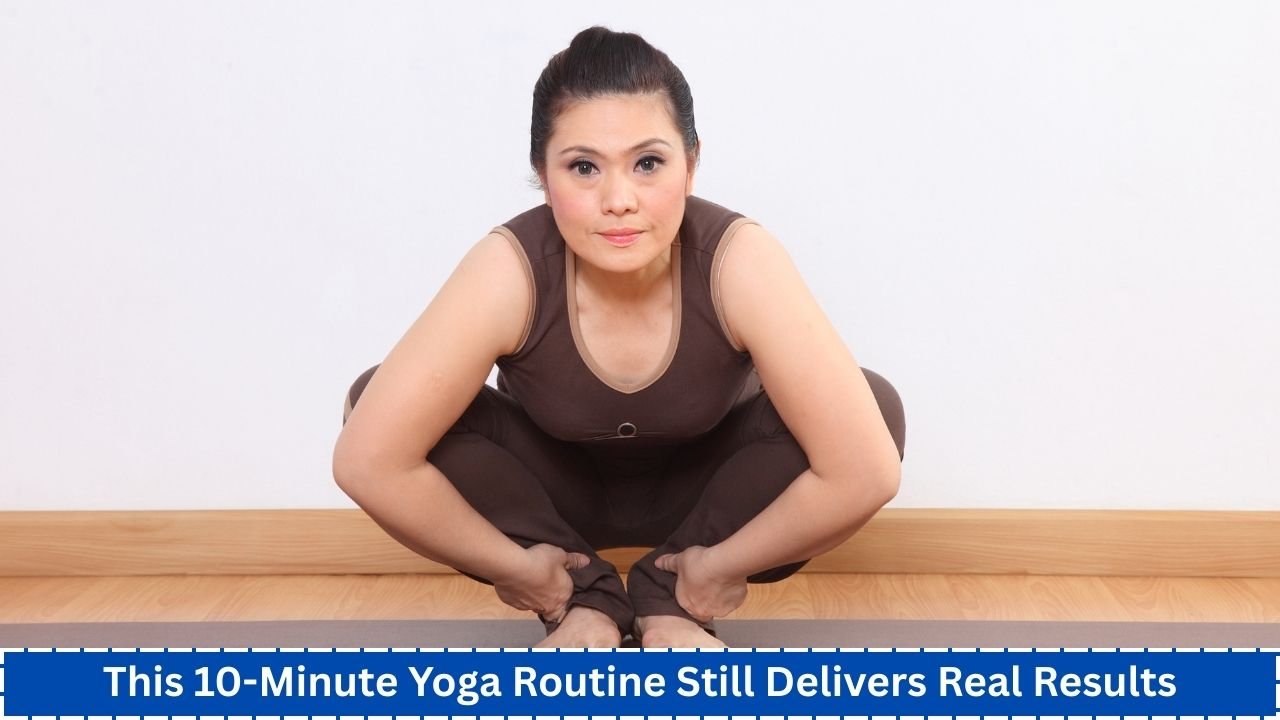
Modern life rarely slows down. Between demanding schedules, constant notifications, and daily responsibilities, finding time for a full workout can feel unrealistic. Yet skipping movement altogether often leads to stiffness, low energy, and mental fatigue. The solution isn’t necessarily longer workouts — it’s smarter ones. A focused 10-minute yoga routine can improve flexibility, build strength, reduce stress, and reset your mind without overwhelming your schedule.
Yoga works because it blends mobility, breath control, and muscular engagement. Even in a short window, intentional movement paired with deep breathing can activate circulation, regulate the nervous system, and enhance mental clarity. When done consistently, short sessions produce noticeable improvements in posture, flexibility, and resilience to stress.
Below is a streamlined 10-minute sequence designed to target key tension zones while energizing the entire body.
Why a 10-Minute Routine Works
Short yoga sessions are effective because they focus on compound movements and mindful breathing. Research in exercise science continues to show that brief, consistent activity can improve metabolic health, joint function, and mood. When movements are intentional and breathing is steady, even a short practice stimulates muscle activation and nervous system balance.
Instead of trying to “fit in” an hour-long workout, a daily 10-minute commitment becomes sustainable — and sustainability drives results.
The 10-Minute Yoga Flow
This routine moves from grounding breathwork to dynamic mobility and finishes with strengthening and gentle spinal rotation.
1. Centering Breath (1 minute)
Sit comfortably. Close your eyes and inhale slowly through your nose, allowing the belly to expand. Exhale gently through the mouth. Repeat for 3–5 deep breaths.
Benefits:
- Calms the nervous system
- Reduces cortisol levels
- Improves focus
- Prepares muscles for movement
Starting with breath improves body awareness and sets the tone for efficient movement.
2. Neck and Shoulder Release (1 minute)
Roll shoulders back and down. Gently tilt the head side to side, stretching the neck. Make small circular motions without forcing the range.
Benefits:
- Releases upper-body tension
- Improves posture
- Reduces screen-related strain
Most daily tension accumulates in this area. Releasing it early enhances mobility for the rest of the practice.
3. Cat-Cow (1–2 minutes)
Come to hands and knees. Inhale as you arch the spine (Cow), lifting chest and tailbone. Exhale as you round the back (Cat), drawing chin toward chest.
Benefits:
- Improves spinal mobility
- Lubricates joints
- Enhances circulation
- Reduces back stiffness
This flowing movement restores flexibility along the spine and gently warms up the core.
4. Downward Facing Dog (1 minute)
From all fours, lift hips upward into an inverted “V.” Press palms firmly into the mat and lengthen the spine. Keep knees slightly bent if needed.
Benefits:
- Stretches hamstrings and calves
- Strengthens shoulders
- Engages core muscles
- Boosts blood flow
This pose acts as a full-body reset and energizer.
5. Standing Forward Fold (1 minute)
Stand tall, hinge at the hips, and fold forward. Allow your head and arms to hang naturally.
Benefits:
- Releases lower back tension
- Stretches hamstrings
- Calms the mind
- Encourages circulation
This posture promotes relaxation while lengthening tight posterior muscles.
6. Low Lunge (2 minutes total)
Step one foot back and lower the back knee. Keep front knee aligned over ankle. Hold for 3–5 breaths, then switch sides.
Benefits:
- Opens tight hip flexors
- Improves mobility
- Reduces lower back strain
- Enhances balance
Tight hips are common due to prolonged sitting. This pose directly addresses that issue.
7. Chair Pose (1 minute)
Stand with feet hip-width apart. Bend knees and sit back as if lowering into a chair. Raise arms overhead.
Benefits:
- Strengthens thighs and glutes
- Engages core
- Builds endurance
- Increases alertness
This energizing pose builds lower-body strength quickly.
8. Seated Twist (1 minute)
Sit tall. Cross one leg over the other and gently rotate toward the bent knee. Keep spine long. Repeat on the opposite side.
Benefits:
- Improves spinal mobility
- Stimulates digestion
- Relieves mid-back stiffness
- Restores balance
A twist at the end refreshes the body before returning to daily tasks.
Quick Reference Table
| Pose | Primary Benefit | Time |
|---|---|---|
| Centering Breath | Nervous system reset | 1 min |
| Neck & Shoulder Release | Tension relief | 1 min |
| Cat-Cow | Spinal mobility | 1–2 min |
| Downward Dog | Full-body stretch | 1 min |
| Forward Fold | Posterior chain release | 1 min |
| Low Lunge | Hip opening | 2 min |
| Chair Pose | Strength & endurance | 1 min |
| Seated Twist | Spinal refresh | 1 min |
Total time: Approximately 10 minutes.
Key Benefits of This Routine
Practicing this sequence consistently can lead to:
- Improved flexibility in hips and hamstrings
- Stronger legs and core
- Better posture
- Reduced stress and anxiety
- Enhanced energy levels
- Improved focus throughout the day
Because it targets major muscle groups and combines breath control with mobility work, it provides a balanced mini-workout in minimal time.
How Often Should You Practice?
Aim for 3–5 sessions per week. Daily practice is ideal if time allows. The consistency of short sessions matters more than occasional long workouts.
Is It Beginner-Friendly?
Yes. Each pose can be modified:
- Bend knees in Forward Fold
- Keep heels lifted in Downward Dog
- Use blocks for support in Lunge
- Reduce depth in Chair Pose
Yoga is adaptable. Adjust the intensity to match your current fitness level.
Few Key Takeaways
- A 10-minute yoga routine can produce real physical and mental benefits
- Breathwork enhances the effectiveness of movement
- Consistency matters more than duration
- Targeted poses improve mobility and strength efficiently
- Short sessions are sustainable and practical
Final Thoughts
When time feels limited, movement often becomes optional — but it shouldn’t be. A focused 10-minute yoga routine offers a practical, effective way to maintain flexibility, build strength, and reduce stress without disrupting your day.
You don’t need an hour. You don’t need equipment. You just need 10 intentional minutes.