
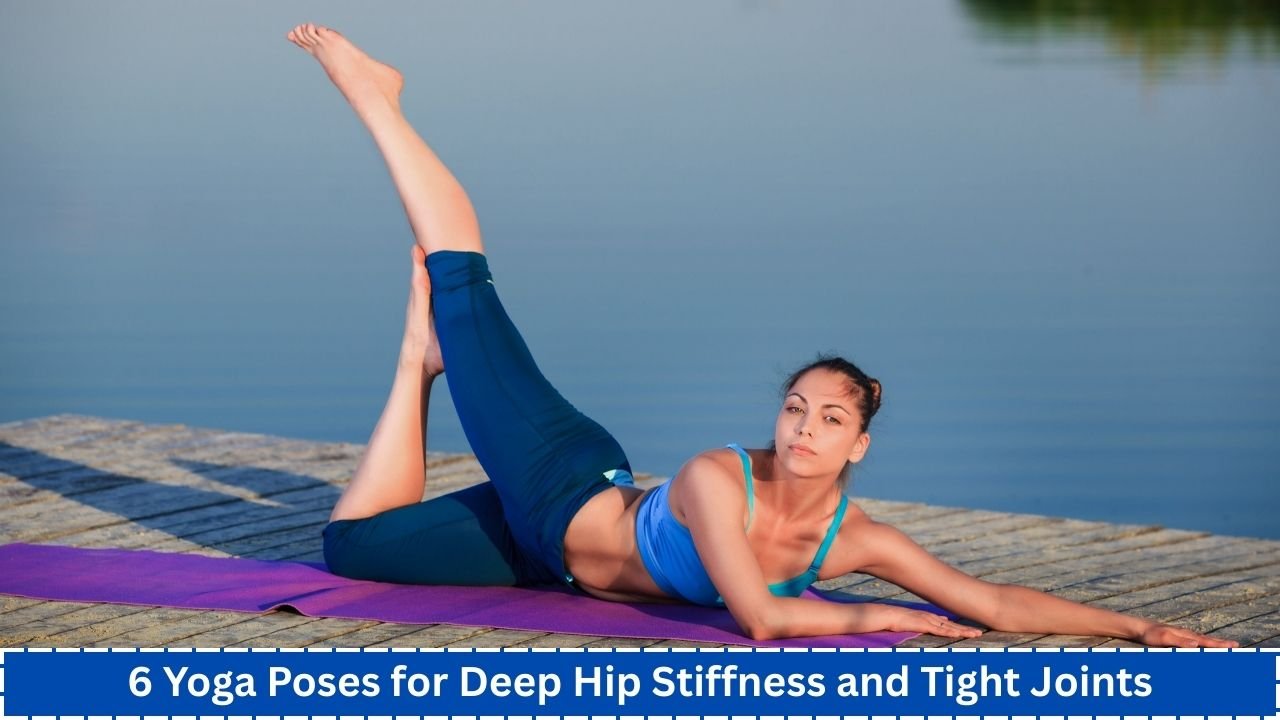
Deep hip stiffness and tight joints can quietly limit your daily life. Whether it’s difficulty squatting, discomfort after long hours of sitting, or tension during simple movements like walking or bending, restricted hips affect posture, balance, and overall comfort. Because the hips connect the upper and lower body, stiffness in this area often triggers strain in the lower back and knees.
Gentle, targeted yoga poses can help reduce deep hip tension, improve circulation, and restore joint mobility. When practiced consistently, these movements support both flexibility and muscular balance, helping you move more freely and comfortably.
Below are six effective yoga poses designed to address deep hip stiffness and tight joints.
Why Hip Stiffness Happens
Modern lifestyles contribute significantly to limited hip mobility. Common causes include:
- Prolonged sitting, which shortens hip flexors
- Weak glute muscles
- Limited internal and external rotation
- Poor posture habits
- Stress-related muscular tension
When hips lose mobility, surrounding joints compensate. The lower back may tighten, knees may feel strained, and walking mechanics can shift. Addressing hip stiffness directly can reduce these compensations and support better alignment.
1. Butterfly Pose (Baddha Konasana)
Butterfly Pose gently stretches the inner thighs, groin, and hip joints. It is especially helpful for releasing tight adductor muscles.
How to practice:
Sit upright with the soles of your feet together. Let your knees fall outward naturally. Keep your spine long and hinge slightly forward from the hips. Avoid rounding the back.
Benefits:
- Improves hip external rotation
- Relieves inner thigh tension
- Encourages pelvic mobility
- Supports circulation in the lower body
Hold for 60–90 seconds while breathing slowly.
2. Pigeon Pose (Modified)
Pigeon Pose is one of the most effective deep hip openers. It stretches the glutes, piriformis, and hip flexors simultaneously.
How to practice:
From a tabletop position, bring your right knee toward your right wrist. Extend your left leg back. Keep hips as level as possible. Stay upright or fold forward gently.
Benefits:
- Targets deep hip rotators
- Releases glute tension
- Improves hip joint flexibility
- Reduces lower back strain
Use a cushion under the front hip if needed to reduce intensity.
3. Garland Pose (Malasana)
Garland Pose is a deep squat that promotes hip mobility and strengthens the lower body.
How to practice:
Stand with feet slightly wider than hip-width. Lower into a deep squat with heels grounded if possible. Press elbows against inner knees and lift the chest.
Benefits:
- Enhances hip flexion
- Stretches groin and lower back
- Improves ankle mobility
- Strengthens lower body muscles
Hold for several breaths while keeping the spine tall.
4. Reclining Bound Angle Pose (Supta Baddha Konasana)
This restorative pose gently opens the hips while encouraging relaxation.
How to practice:
Lie on your back and bring the soles of your feet together. Allow knees to fall outward. Support knees with cushions if necessary.
Benefits:
- Relaxes pelvic floor muscles
- Reduces hip joint tension
- Promotes deep breathing
- Calms the nervous system
Stay in this posture for 2–3 minutes for maximum benefit.
5. Cow Face Pose (Gomukhasana – Lower Body Focus)
Cow Face Pose deeply stretches the outer hips and glutes.
How to practice:
Sit with one knee stacked over the other. Feet rest beside the hips. Keep the spine upright. If needed, sit on a cushion for support.
Benefits:
- Improves hip external rotation
- Stretches glute muscles
- Supports posture
- Enhances joint flexibility
Hold for 60 seconds on each side.
6. Happy Baby Pose (Ananda Balasana)
Happy Baby Pose gently mobilizes the hips while releasing lower back tension.
How to practice:
Lie on your back and draw knees toward your chest. Hold the outer edges of your feet and gently draw knees toward your armpits. Rock gently side to side.
Benefits:
- Releases hip tension
- Massages lower back
- Improves joint mobility
- Encourages relaxation
Hold for 60–90 seconds with steady breathing.
Quick Reference Table
| Pose | Main Target Area | Best For | Recommended Hold |
|---|---|---|---|
| Butterfly Pose | Inner thighs | Mild stiffness | 60–90 sec |
| Pigeon Pose | Glutes, rotators | Deep stiffness | 60–90 sec each side |
| Garland Pose | Hip flexion | Mobility & strength | 5–8 breaths |
| Reclining Bound Angle | Pelvic area | Relaxation | 2–3 min |
| Cow Face Pose | Outer hips | Rotation limits | 60 sec each side |
| Happy Baby Pose | Hip joints | Joint release | 60–90 sec |
How to Build a Simple Routine
For deep hip stiffness, try this 15-minute sequence:
- Butterfly Pose – 2 minutes
- Garland Pose – 1 minute
- Pigeon Pose – 2 minutes total
- Cow Face Pose – 2 minutes total
- Happy Baby Pose – 2 minutes
- Reclining Bound Angle Pose – 3 minutes
Practice at least four times per week. Gentle consistency produces better results than forcing intense stretches occasionally.
Safety Tips for Tight Joints
- Never push into sharp pain
- Support hips with blocks or cushions
- Keep breathing slow and controlled
- Move gradually into deeper ranges
- Warm up lightly before deep stretches
Joint stiffness often improves when muscles feel safe and relaxed. Slow breathing activates the parasympathetic nervous system, which can reduce muscular guarding and allow deeper release.
Few Key Takeaways
- Deep hip stiffness can affect posture and joint health
- Gentle yoga poses improve mobility without strain
- Pigeon and Garland are particularly effective for tight hips
- Consistency matters more than intensity
- Support and modifications enhance safety
Final Thoughts
Hip stiffness doesn’t resolve overnight, but targeted, mindful movement can significantly improve joint comfort and flexibility. By incorporating these six yoga poses into your weekly routine, you may experience smoother movement, reduced discomfort, and better overall mobility.