
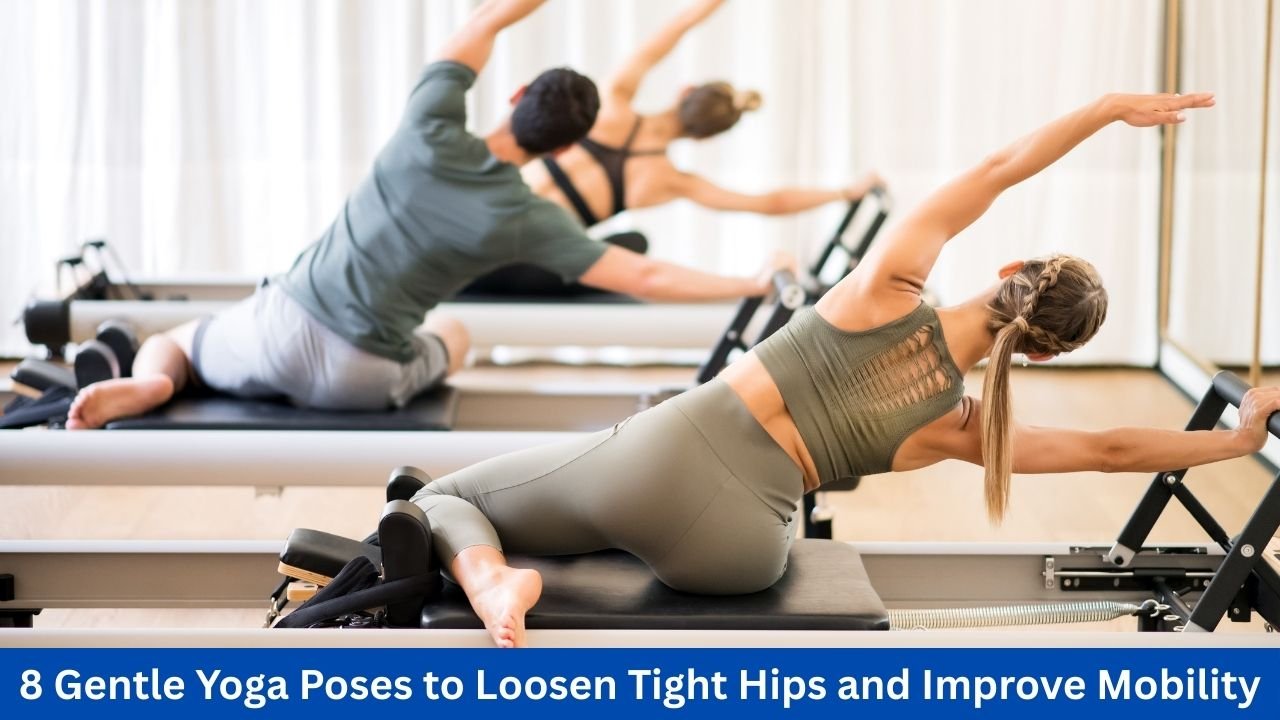
Tight hips have quietly become one of the most common movement complaints in modern life. Long hours at desks, in cars, or on couches can gradually reduce comfortable hip extension and change how your body feels when you stand, walk, or squat. Over time, limited movement patterns may contribute to a real “stiffness adaptation,” where the body becomes accustomed to shortened positions.
The encouraging part? You don’t need extreme flexibility or intense stretching sessions to improve hip mobility. A short, low-intensity yoga sequence performed consistently can help restore usable range of motion, improve circulation, and make everyday movement feel smoother. Gentle yoga practices are widely associated with improvements in flexibility and joint mobility across various age groups and activity levels.
Below are eight accessible yoga poses designed to target hip flexors, glutes, inner thighs, and deep hip rotators — the areas most people describe as “tight hips.” The emphasis is on comfort, breath control, and joint-friendly alignment.
Why Hips Feel Tight Even If You Stretch
Hip tightness is rarely caused by just one muscle. It usually involves several factors working together:
- Hip flexors and quadriceps adapting to shortened positions from prolonged sitting
- Underactive glutes and deep rotators shifting workload toward the front of the hips
- Limited internal or external hip rotation
- Adductor stiffness creating discomfort during lunges or squats
- Nervous-system guarding when a stretch feels too intense
Instead of forcing deeper stretches, pairing gentle mobility work with proper pelvic positioning often produces better results. Small alignment adjustments can dramatically change how a stretch feels and how effective it becomes.
The 8 Gentle Yoga Poses for Hip Mobility
1. Supported Child’s Pose (Knees Wide)
A calming, restorative opener that reduces tension around the hips.
Start on hands and knees, bring your big toes together, and widen your knees. Sit back toward your heels and rest your forehead on stacked fists or a cushion. Breathe deeply into the sides of your ribs.
Best for: General hip release and nervous-system relaxation.
2. Low Lunge (Gentle Anjaneyasana)
Step one foot forward with the back knee resting on padding. Keep your torso upright and lightly tuck the pelvis by imagining your tailbone dropping toward the floor. Stay within a pain-free range.
Best for: Hip flexors and quads, especially after prolonged sitting.
Tip: If your lower back compresses, shorten your stance.
3. Half Split (Ardha Variation)
From low lunge, shift your hips back and straighten the front leg. Flex the foot and hinge forward at the hips. Keep a slight bend in the knee if needed.
Best for: Hamstrings and the back line of the hips.
4. Reclined Figure Four
Lie on your back and cross one ankle over the opposite thigh. Hold behind the supporting thigh and gently draw it toward your chest. Keep both feet active to protect your knees.
Best for: Glutes and deep hip rotators.
5. Supine Butterfly
Lie on your back and bring the soles of your feet together, letting the knees fall open. Support your thighs with cushions if necessary. Place one hand on your belly and breathe slowly through your nose.
Best for: Inner thighs and groin mobility without strain.
6. 90/90 Hip Switches
Sit with both legs bent at roughly 90 degrees. Slowly rotate your knees from side to side while keeping your chest tall. Move only within a range you can control smoothly.
Best for: Improving internal and external hip rotation.
7. Thread-the-Needle (Reclined Twist)
Lie on your back, hug one knee into your chest, and gently guide it across your body. Keep shoulders relaxed and avoid sharp pinching sensations.
Best for: Outer hip and pelvic mobility.
8. Supported Bridge Pose
Lie on your back with knees bent and feet under knees. Press through your heels and lift your hips. For a restorative option, place a block or cushion under your sacrum.
Best for: Strengthening hip extension and counteracting “chair posture.”
Quick Reference Table
| Pose | Main Hip Area | Hold/Time | Key Cue | Easy Modification |
|---|---|---|---|---|
| Supported Child’s Pose | General release | 60–90 sec | Breathe into ribs | Pillow under hips |
| Low Lunge | Hip flexors | 45–60 sec/side | Gentle pelvic tuck | Hands on blocks |
| Half Split | Hamstrings | 45–60 sec/side | Hinge from hips | Bend front knee |
| Reclined Figure Four | Glutes/rotators | 60 sec/side | Flex both feet | Bottom foot on floor |
| Supine Butterfly | Adductors | 90–120 sec | Support knees | Pillows under thighs |
| 90/90 Switches | Rotation mobility | 6–10 reps | Move slowly | Hands behind body |
| Thread-the-Needle | Outer hip | 45–60 sec/side | Relax shoulders | Smaller twist |
| Supported Bridge | Hip extension | 8–10 reps or 60 sec | Press through heels | Block under sacrum |
A Simple 8–10 Minute Routine
You can combine these poses into a short daily flow:
- Supported Child’s Pose – 1 minute
- Low Lunge – 1 minute total
- Half Split – 1 minute total
- Reclined Figure Four – 2 minutes total
- Supine Butterfly – 2 minutes
- 90/90 Switches – 1 minute
- Thread-the-Needle – 1 minute total
- Supported Bridge – 1 minute
Practice this sequence 4–6 days per week for two weeks. Notice how your hips feel when standing up, climbing stairs, or performing squats.
Why Gentle Consistency Works
Many people believe deeper stretching equals faster results. In reality, the nervous system plays a major role in flexibility. When stretches feel aggressive, your body may tighten to protect itself. Gentle, supported positions allow the muscles to gradually relax, improving mobility without triggering protective tension.
Including both stretching and controlled rotation drills like 90/90 switches supports functional mobility. Meanwhile, strengthening movements such as bridge pose reinforce hip extension, helping reverse the effects of prolonged sitting.
Few Key Takeaways
- Gentle yoga can significantly improve hip mobility when practiced consistently
- Combining stretching with controlled rotation enhances long-term results
- Pelvic alignment matters more than depth in hip-flexor stretches
- Supported holds calm nervous-system tension
- Hip extension exercises are essential if you sit for long hours
Tight hips don’t require extreme solutions. With focused breathing, proper alignment, and regular practice, you can restore comfortable movement and make daily activities feel lighter and more fluid.